Across every industry and organizational type, the pressure to grow has intensified. Whether a business is selling services, a nonprofit is scaling outreach, or a startup is establishing market presence, the need for structured, reliable business development has become universal. Yet many organizations still rely on outdated approaches manual outreach, inconsistent follow ups, scattered data, unclear messaging, and processes that depend entirely on individual effort. This creates unpredictable results and prevents meaningful scalability.
In 2026, Business Development is no longer about persuasion or personality. It is about structure. Growth becomes predictable when an organization builds systems that guide the entire lifecycle of engagement from the moment a lead enters the pipeline to the moment they convert. The most successful organizations today are those that invest in CRM driven workflows, automated communication sequences, well defined audience profiles, and messaging frameworks that address emotional and logical decision making simultaneously.
The psychology of conversion remains remarkably stable across sectors. People choose an organization for three reasons: speed, clarity, and confidence. The fastest responder usually wins the opportunity. The brand that communicates its value with the highest clarity reduces hesitation. And the organization that presents itself with confidence becomes the default choice in the mind of the buyer or donor. These psychological triggers operate in both business and nonprofit environments, making them universally applicable.
However, achieving this level of effectiveness requires more than effort, it requires discipline. Organizations that fail in Business Development typically struggle because their data is fragmented, their outreach is inconsistent, and their follow ups depend heavily on memory rather than systems. When these weaknesses are replaced with automated pipelines, persona based messaging, multi touch engagement, and real time visibility, the entire revenue engine transforms from reactive to strategic.
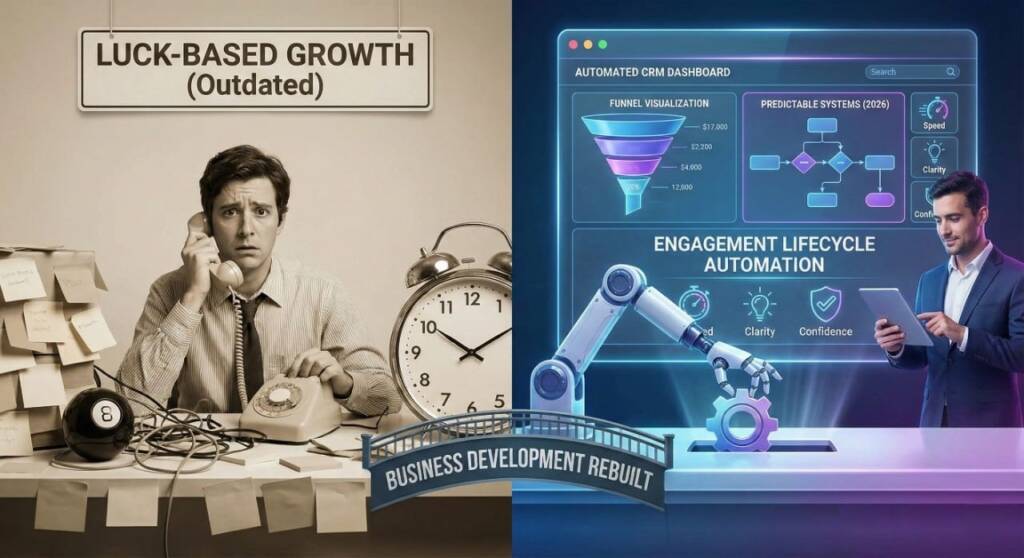
Business Development has become the heartbeat of sustainable growth. In a world where competition is global, attention spans are short, and buyers expect immediate clarity, organizations must build engines not hope for results. The ones that succeed in 2026 will be those who operationalize BD as a system, not an activity, and who treat growth as an engineered outcome rather than a matter of chance.